
Addictive Seasonal Salads: a Fail-Safe Formula
What's the occasion? I need no-brainer summer meals, and so do you.

Hey there, folks. It’s been a minute, and I thought I’d tell you why. (Don’t worry: It’s good news!)
I’m excited to let you know that I’ve been writing a book called “Your Plate & the Planet,” which is a practical guide to cooking and eating sustainably. It’s due to my publisher in mid-September, and between that deadline and a few other commitments, I fear I’ve been giving Life, Death & Dinner somewhat short shrift.
That’s been making me low-key stressed, because my intention was to deliver a recipe (or story, or “Goods” roundup) every week, and I haven’t quite been able to manage that. So as recompense to paid subscribers (and as a pressure-release valve for me), I’m extending paid subscriptions by 90 days at no extra cost, and extending the same benefit to anyone who signs up for a paid sub between now and September 15.
I may not be posting a lot of recipes lately, but I am eating well. I’ve been keeping it super simple by following a loose formula I stumbled upon for hearty chopped salads—sometimes more like slaws—that incorporate whatever raw vegetables and leftover protein I have in the fridge. (Depending on what’s around and how I’m feeling, I may also include a grain, though more and more I seem to be focusing on the lighter lean-protein + veg approach.) Because I’m using high-fiber veggies like cabbage, they fill me up and keep me full for hours—unlike salads made primarily with soft leafy greens.
This isn’t rocket science, but there’s something about having a “formula” that instantly removes any anxiety about what to make for lunch or dinner. It’s simply this:
Raw veggies + Protein + Delicious dressing + Toppings
More specifically…
Hearty, crunchy vegetables that last a long time in the fridge. Think shredded or finely chopped cabbage (I love purple for the vibrant color), kale, thinly sliced bok choy, grated or thinly sliced carrots, radishes, cucumbers, kohlrabi, peppers, and even broccoli.
Tips:
Wash then shred or chop the veggies when you bring them home from the market and keep them in the fridge in bags or containers so you only have to perform a quick assembly job over the next few meals.
Better yet, store a big container of whatever combo you’re enjoying. If it’s entirely made up of hearty-type veg (and not soft lettuces) and you plan to eat it in the next couple of days, you can even store it dressed.
I break down half a cabbage at a time because it yields so much, and the uncut half lasts until I’m ready for it. If I don’t feel like taking out the food processor (and I often don’t), I cut the cabbage into narrow wedges, then use a chef’s knife to cut thin slices across each wedge.
I like to use a box grater for carrots—either the large-hole shredding side or the slicing side with the three horizontal blades.
Keep cucumbers whole until ready to use, so they don’t get slimy. I’ve found they last longest if you wrap each one in a little paper towel then store them together in an open bag or container in the crisper drawer.
Simple proteins; mainly leftovers: chicken, pork, shrimp, and tofu have all recently made it into the bowl.
Tips:
I’m keeping extra-firm tofu around because it lasts a long time (unopened) and makes a perfect addition to these salads when cubed or sliced into rectangles, sprinkled with Chinese 5-spice powder (or just a little salt) and seared in neutral oil in a hot pan. Sprinkling them with cornstarch yields the crispest cubes. This article from thekitchn.com walks you through the merits of the various methods.
Even easier: I’ve fallen in love with silken tofu, which is an absolute treat uncooked, doused in peanut sauce (see recipe below), and served alongside the chopped salad.
I’m roasting a lot of chicken these days, because I love it, it’s easy—try my simplest method—and it makes for several solid meals. Leftovers are excellent shredded or diced into these salads.
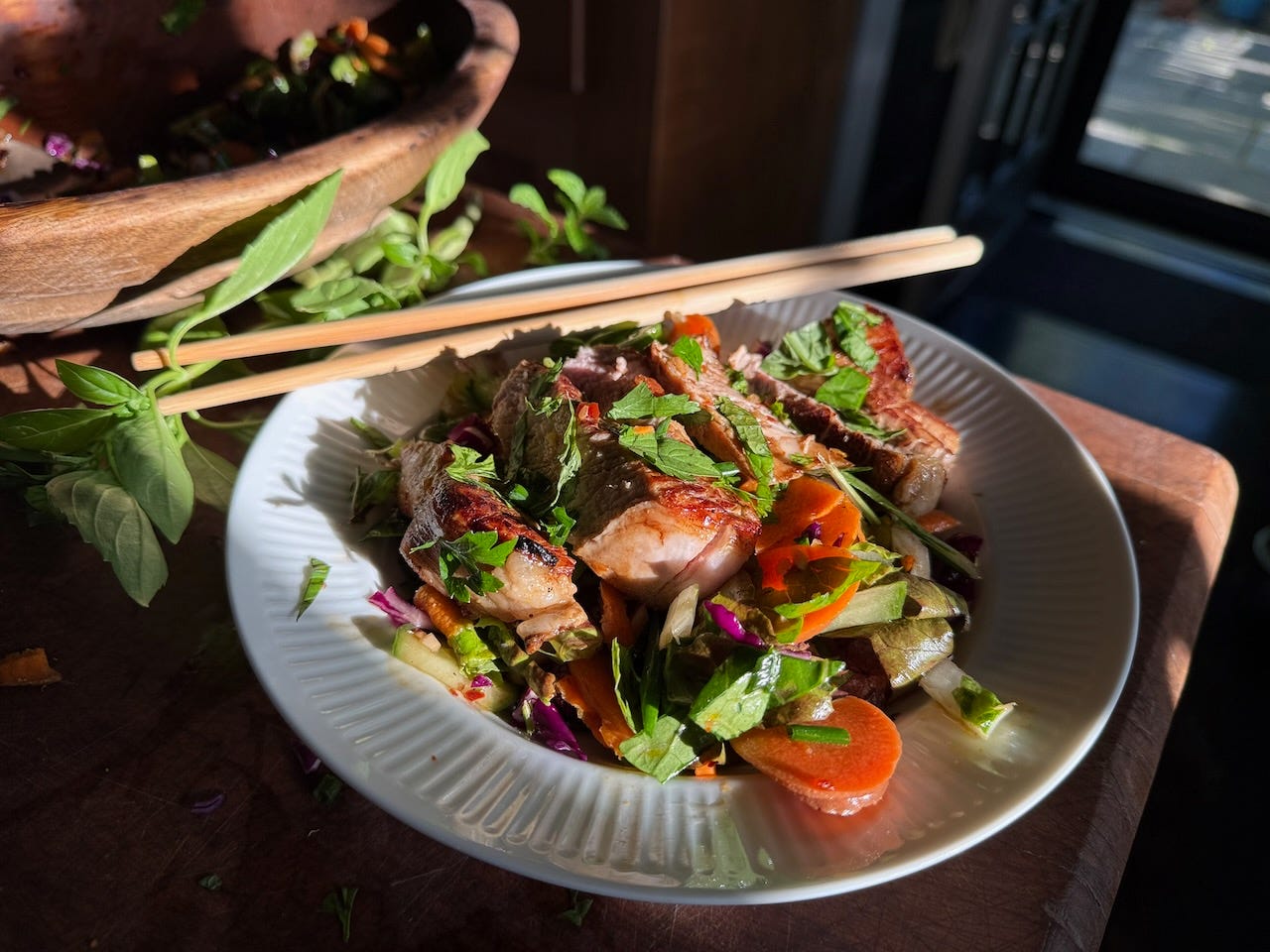
Pork tenderloin is another easy-to-make and delicious lean protein. I’ve been cutting mine into 1½–2-inch-thick medallions, marinating them in a Vietnamese-style mix of fish sauce, sugar, and minced garlic, then grilling or pan searing them until just pink. I toss it with veggies and lots of herbs in a dressing that’s basically nuoc cham to which I’ve added a little neutral or sesame oil. Speaking of which…
Delicious dressing. This is absolutely key. The sauce has to be one you love so much you’re tempted to lick the bowl. For me lately that’s often the simple, bright spicy peanut sauce below. I often douse the whole salad with extra fresh lime juice before eating.
Terrific toppings.
Herbs. I recommend a huge handful of them. Think ingredient, not garnish. I’ve been tearing up a mixture of parsley, mint, cilantro, and thai basil lately.
Nuts or seeds or.... Toasted sesame seeds, black or white, are great here. And while I love the texture of roasted peanuts, these days I’ve just been using very chunky peanut butter in my dressing to keep it extra easy. (See below.) Toasting shelled pistachios or slivered almonds in a dry pan is also a good idea.
Spicy something. Whether sriracha, chili crisp, or pickled or raw jalapeños, a little jolt of heat is always satisfying.
Pickled red onion. It’s great to have a batch in the fridge.
You could 100 percent turn these salads into “bowls” by adding a scoop of a cooked grain like rice, quinoa, or farro. You could also boil up some rice noodles to toss with the veg and protein, or make one of the Momofuku noodle packets, as I did below, and toss your chopped veggies and diced protein together with that.

Chunky Peanut Sauce
Makes around 1½ cups
½ cup chunky peanut butter
2 tablespoons soy sauce (more or less depending on how salty your peanut butter is)
2 tablespoon sesame oil
1 teaspoon honey (more or less depending on how sweet your peanut butter is)
2 tablespoons rice wine vinegar
2 tablespoons fresh lime juice
1 garlic clove, grated
1 teaspoon chili crisp (or to taste)
½ cup cold water (more or less depending on the consistency you desire)
Combine all ingredients except the water in a measuring cup or bowl. Stir with a fork or small whisk to combine, then drizzle in the water slowly while stirring, until sauce reaches the consistency you want—pourable for a salad dressing or noodle sauce; thicker as a dip.


