


              The art of losing isn’t hard to master;
              so many things seem filled with the intent
              to be lost that their loss is no disaster.
              — Elizabeth Bishop, “One Art”
I remember the night I started writing about dinner. We’d just finished eating—turkey tacos with black beans, topped with thin, crescent-shaped slices of mango and avocado, one of the kids’ favorite meals. Mark had shaken up a batch of his famously potent Mark-a-ritas: silver tequila and Cointreau, fresh lime juice and a little simple syrup. We listened to Ry Cooder’s Chavez Ravine.
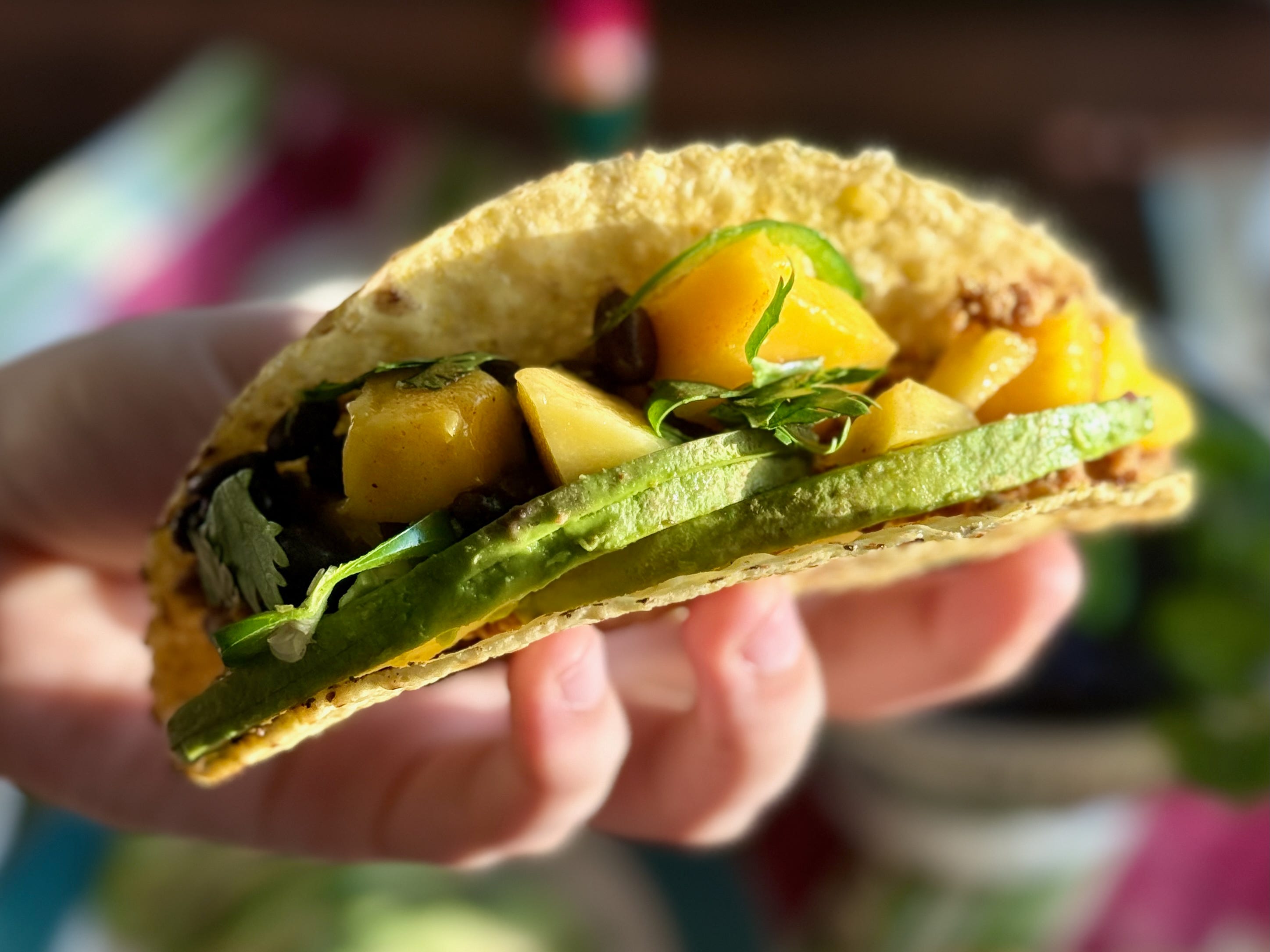
Eleven-year-old Rex and six-year-old Teddy dispersed, and Mark cleared the dishes while I opened my laptop at the double-pedestal mahogany table that had been my grandparents, which took up half our living room. Encouraged by the breeze coming in through an open window, hot wax from a pair of candles dripped in rivulets down one side of their holders onto the table’s cracked veneer.
Out the window the sky was lavender above the tops of the trees, which had turned a dusky green. Lights were starting to go on, twinkling within the low buildings of upper Manhattan beyond the northern tip of Central Park. Our music stopped and I heard Mark reading to Teddy in the kids’ bedroom, his made-for-radio voice low and resonant. I heard someone’s dishes clanking in a neighboring apartment, the clock ticking on our kitchen wall, and the faint whir of traffic fifteen floors below. I wrote it all down.
It wasn’t a special night, not really, but thinking about it now I’m reminded of the last act of Thornton Wilder’s “Our Town,” which my mother’s friend Vivian took me to see at the Westport Playhouse for my twelfth birthday, and which I found so painfully beautiful it stuck with me forever.
The character Emily has just died in childbirth and her restless spirit decides to revisit a day in her life on earth. The spirit of her late mother-in-law, Mrs. Gibbs, advises her to choose the least important day, saying “It will be important enough.” Emily chooses her twelfth birthday and finds herself observing the quotidian commotion of her family’s morning routine. Spirit Emily watches as adolescent Emily asks her mother for a moment of attention, an acknowledgement of the occasion, and her mother responds by giving her a birthday present. Spirit Emily is quickly overwhelmed by emotion and cuts her visit short.
“Do any human beings ever realize life while they live it? — Every, every minute?” she asks the Stage Manager character, and he says no.
No, it wasn’t a special night, though of course in hindsight I see that differently. At the time, what distinguished it from any other of the period was only that it was the night I began keeping a dinner diary.
I had decided to start the project for a few reasons. I was cooking all the time in those days—for my family, friends, and extended family, especially my mother, Sandy, who lived on East 71st Street in the apartment I grew up in, and my sister, Karen, and her husband and daughters, who were about a mile down from us on the Upper West Side.
Cooking was more than a daily task for me; it was my creative outlet. It was also what I did for work, because at a certain point—thanks in part to a pivotal conversation I had with my mother soon after I got married—I managed to figure out that you can sometimes be lucky enough to do what you love.
I realized I was making all these seriously good meals, riffing on recipes from my ever-expanding cookbook collection or coming up with dishes inspired by what I found at the market, my mood, or what I’d eaten in a restaurant or at someone else’s house. I’d create something we were crazy about, but when I tried to reproduce it a couple of weeks later, it was never the same. If only I’d taken notes!
I have a well-honed food memory, in that I remember what I was eating at this or that event or significant moment in my life, and usually with whom. The night Mark and I, having been dating for about nine months, had an argument about the merits of marriage versus living together—at that point he subscribed to his older brother Ken’s anti-marriage philosophy—we were sitting at a high table by the door of a narrow Mexican restaurant near the Magic Box Theater in Chicago, where we lived at the time, eating chicken tacos and pork-filled tamales. On the night a few months later when my parents met my future in-laws, we had hummus, babaganoush, and kabobs at a place called Reza’s.
But what had I cooked the last time our friends Rob and Lisa came to dinner? Maybe my lamb tagine, or a big platter of roast chicken and vegetables? There were too many meals to keep track of: the dinner parties on Saturday nights, the family gatherings on Sundays, and the last-minute “Why don’t you come by because there’s going to be a lot of food” evenings. So I decided to document what I cooked.
I wanted this to be another kind of record, too. My dad died in his mid-fifties when I was twenty-seven years old. My grandparents were gone. I remember all of them in all sorts of ways, but most concretely I remember them through what we ate together, and what was happening when we shared those meals. Now in my early forties, I was beginning to understand that life is full of impermanence, and that food was a kind of scaffold for me, lending comfort and sustenance as needed—and that recipes, little chronicles of flavors and family memories passed down over generations, could act as a kind of anchor.
One evening when I was an adolescent—around the same time I saw “Our Town”—my father taught me the concept of carpe diem, seize the day. We were sitting together on the sofa in our living room before dinner, Bach playing in the background. My dad was drinking Dewar’s on the rocks from a heavy, monogrammed glass—always the same sweet-smoky-spicy smell; always the same clinking-ice-cubes sound. This was his evening ritual: He’d walk in from work and quickly change out of his business suit into Levi’s and an “alligator” shirt. Then he’d fix himself the drink and go into the living room to relax until my mom said dinner was ready. I didn’t know he had chronic leukemia yet; they kept it from us for a very long time. Even so, as we sat together on the sofa that night, I grasped that he was telling me something important.
This dinner diary would be my way of seizing the day; of documenting a mundane task that was much more than that to me. Writing about food and family would connect me to my history while celebrating the present, and at the same time, become a record for the future.
What I didn’t know that night when I began the project was that I was recording a period that would be gone shockingly soon. It was so fleeting, in fact, that I’d be left in only a few short years with a life that hardly resembled the one I imagined for myself, Mark, and our kids on that peaceful spring night after eating turkey tacos.
But I did what I set out to do. I have a chronicle of that time and of the series of events that followed. Every dish I made as my world spun off its axis played a part in keeping me grounded. And every recipe tells a story.