


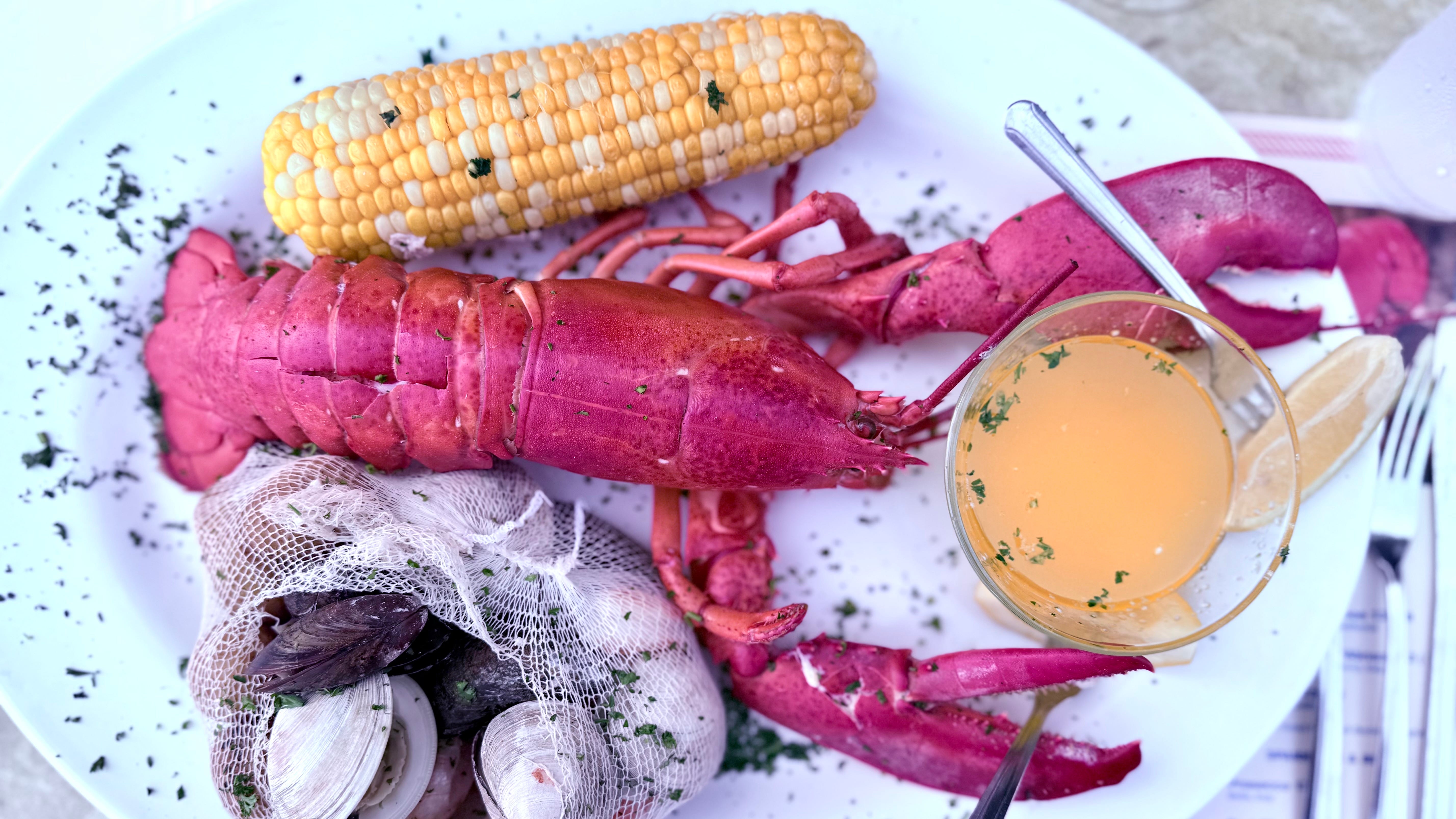
My mother spent childhood summers in Maine, which may account for her near fanatical adoration of the lobster. I’ve never seen anyone eat one like she did—I don’t think anyone has.
Sandy Schoenfein insisted that a crustacean under two pounds wasn’t worth bothering with, and if you were planning to put as much energy into consuming one as she was, then you might think so too. Two and a half or three pounds and now you’re talking. (I, on the other hand, always insisted that smaller is sweeter.)
After eating the tail and the claws more or less like a normal person, my mom would start in on the little spiny legs, then suck on and ingest all of that feathery white connective tissue, along with the red roe and/or greenish tomalley—what most people consider the gross goop within. All the while she’d be cackling with pleasure, slinging the occasional comment about what everyone else at the table was wasting.
I’m a huge lobster fan, but my interest in excavating every edible morsel from the shells pales in comparison to my mother’s. For her, it was gastronomic sport. With her birthday at the end of July and mine in August, we always celebrated with at least one lobster dinner on the porch in Westport.
This particular summer though, with mom undergoing chemo, we were stuck in the city and our birthdays came and went. Instead of elbows on the big white outside table and butter dripping down our chins, we had gotten dressed up and gone to the expensive Italian-seafood eatery Marea for a downer of a dinner.
Now we were in Westport—Mark, the kids, and me, along with mom, Karen, Rob, and the girls—and by god, we were going to have lobster.
I am the resident lobster cook in our family, having inherited the position from my father, whom I watched and helped with this, as with other macho household tasks, throughout my childhood. The cooking is the easy part: Boil a few inches of water in an enormous, heavy stainless-steel stockpot, then place the lobsters inside and clamp on the lid.
I’ve never felt guilty or squeamish about cooking lobsters. I’ve read that they have such primitive nervous systems that they don’t register pain or anxiety the way larger-brained animals do. (Jasper White writes authoritatively about this in his fabulous Lobster at Home.) What bothers people, I think, is that they are actually killing a living creature—killing it themselves—whereas they are able to stay removed from the process when they buy most other meat at the store.
I ordered our lobsters from Pagano’s, a little fish market in Norwalk. When I went to pick them up, there was a customer already there, who, when she heard me request my lobsters, said to the fishmonger, “I just can’t stand the idea of cooking live lobsters. It makes me want to throw up.” Then she looked over at me, standing three feet away from her, smiled tightly, and said, “Sorry.”
Part of me wanted to mention that whatever she was buying had recently been alive as well, but all I did was mutter “Nice” and turn away. Back home, as I pulled each lobster from a big brown paper bag and unapologetically dropped them into the steaming pot, I told the story to my mom and sister. Mom hooted while cracking her best wicked-Sandy smile, and she and Karen agreed that if they’d been there they’d have given my squeamish aggressor a piece of their murderous minds. In any case, we three witches cackled over our cauldron for the next fifteen minutes, until the lobsters were done.
Then came the messy part, my lobster-preparation ritual: First I drained the water from the pot and brought the whole thing out to the porch, where I’d set up a cutting board, a hammer, and a big sharp knife. Wearing a pair of faded green oven mitts used exclusively for this purpose, along with an old apron and huge sunglasses to protect my eyes from the inevitable hot, fishy spatters, I reached into the pot and pulled out the first lobster, placed it on the cutting board belly side up, then stabbed and sliced down it’s center until I got to the end of the tail. Next, I took the hammer and whacked up and down the big claws, cracking the shells enough to make the meat accessible without too much prying with a nut cracker. I served up that lobster and went on to the next.
Meanwhile, we boiled water for corn. (Mom’s rule: We didn’t cook it til the very last minute, so it was hot when we sat down.) We melted tons of butter and poured it into small ramekins. A big platter of sliced tomatoes and fresh mozzarella with basil and red onion, and we were set.
Often, we drank prosecco with this dinner, but that night we ate our magnificent meal with mom’s wine of choice, a Kim Crawford sauvignon blanc from Marlborough in New Zealand. It was just right with the lobster, the citrus and green apple cutting the richness of the buttery meat.
We were all so delighted—I certainly hadn’t imagined we’d be sitting down together that summer to such a decadent, happy feast. That lobster supper was a grand finale of sorts.
That night, I emailed my friend Amy to tell her about the meal, and she wrote back: “There’s a country song on the radio sometimes that says ‘live like you’re dying’ and it seems to me that’s wonderful advice. The way you are treasuring the time, why don’t we all do that?”
After dinner, my normally peripatetic mother sat patiently on the couch holding a magnifying glass, while six-year-old Teddy showed her one Pokemon card after another, earnestly explaining, while she earnestly listened, how many “damage points” and “health points” each cartoonish character possessed and enumerating in great detail all their other esoteric attributes.
“That one looks like a lobster!” Granny Sandy said, and she and Teddy put their heads together and laughed.