


I ran around NYC last week having all kinds of fun: Finally saw Oh, Mary!—such a hoot!—and celebrated a dear friend’s birthday with not one but three culinary adventures (to be revisited in another newsletter). What I didn’t do was cook.
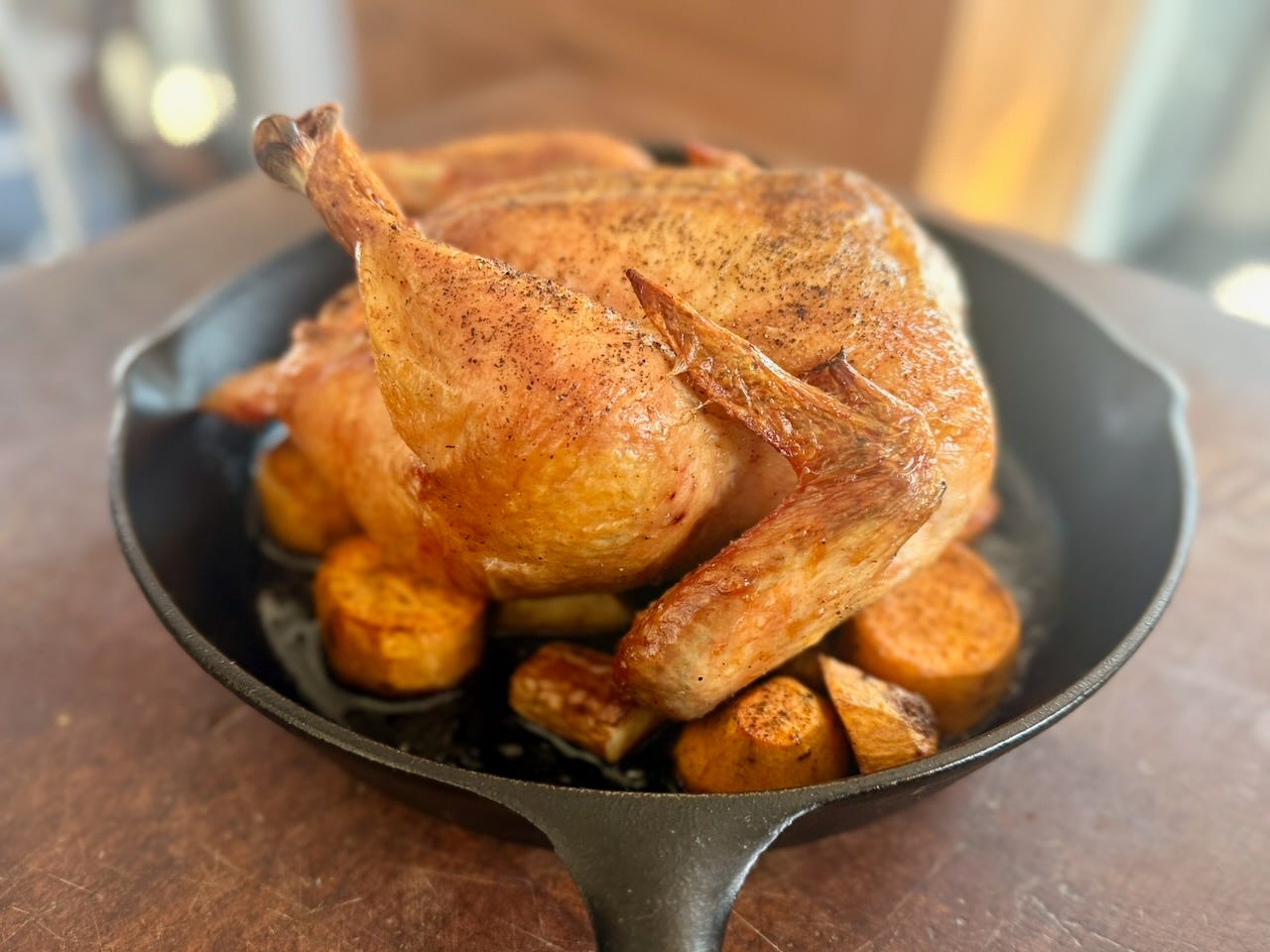
So when I returned to my regular routine, there was only one thing I craved: roast chicken.
Just about my favorite thing to make and eat, roast chicken is the answer to so many what-should-I-cook questions:
What do I make for a cozy family dinner? Answer: roast chicken with polenta or mashed potatoes and garlicky sautéed broccoli rabe.
What do I make for a relaxed dinner party? Answer: 2 chickens roasted with potatoes, carrot, and fennel, served alongside a big green salad and a crusty bread.
What do I cook for a friend who’s sick or blue? Answer: soup from the bones of the roast chicken.
What do I cook for myself when I’m hunkering down at home for a few days? Answer: roast chicken (with root vegetables) that I can eat hot the first night, cold (in a sandwich or chicken salad) for lunch the next day, and shredded into soup or Claudia Roden’s incredible Tagliatelli Frisinal—pasta with chicken, raisins, and pignoli, my adaptation of which you’ll find at the end of this article I wrote for the Forward (about raisins). Any leftover roasted root veg can be pureed—along with the garlic cloves that cooked in the bird’s cavity and a bit of broth—into a mash or thick soup.
It all starts here…
Simplest Pan-Roasted Chicken
Serves 4
1½ teaspoon kosher salt, or to taste
¾ teaspoon freshly ground black pepper or to taste
One 4–4½-pound chicken (any giblets removed from cavity)
1 lemon, halved crosswise
3–4 cloves garlic, peeled and smashed
A few sprigs of rosemary and/or thyme (optional)
2 tablespoons olive oil, divided
About 2 pounds root vegetables (alone or in combination) such as sweet potatoes, carrots, and parsnips, cut into 1½-inch cylinders. (Small/new potatoes can be left whole.)
Cooking spray (or a little more oil)
½ cup chicken stock
¼ cup white wine (or more stock, or water)
Preheat the oven to 425 degrees F. Combine salt and pepper in a small bowl.
Pat the chicken dry with paper towel, sprinkle the cavity with a little of the salt and pepper mixture, then stuff with lemon halves, garlic, and herbs if using. Rub the skin with a tablespoon of the oil, then sprinkle all over with about ¾ of the salt and pepper mixture (leaving some for the root vegetables), and working some under the skin if you’re feeling industrious. (It will add more flavor to the meat, but isn’t necessary if you’re feeling uninspired.)
In a large bowl, toss the vegetables with remaining tablespoon of oil, salt and pepper. A few sprigs of herbs would be nice here too.
Spray a 12-inch cast-iron skillet or 9x12-inch roasting pan with cooking spray, or coat with a thin layer of oil. Arrange vegetables (flat sides of cylinders up/down) and top with chicken (breast side up). Roast for 30 minutes or so, then add the liquid around (not over) the chicken, jostling everything a bit to stop the bottoms of the veg from burning.
Roast for 45-55 minutes more, until the chicken is cooked through. (The juices should run clear, not pink, when you poke a small sharp knife into the fattest part of the thigh, and/or a meat thermometer inserted in the same place should read 160–165 degrees F. It will keep cooking a bit as it rests.)
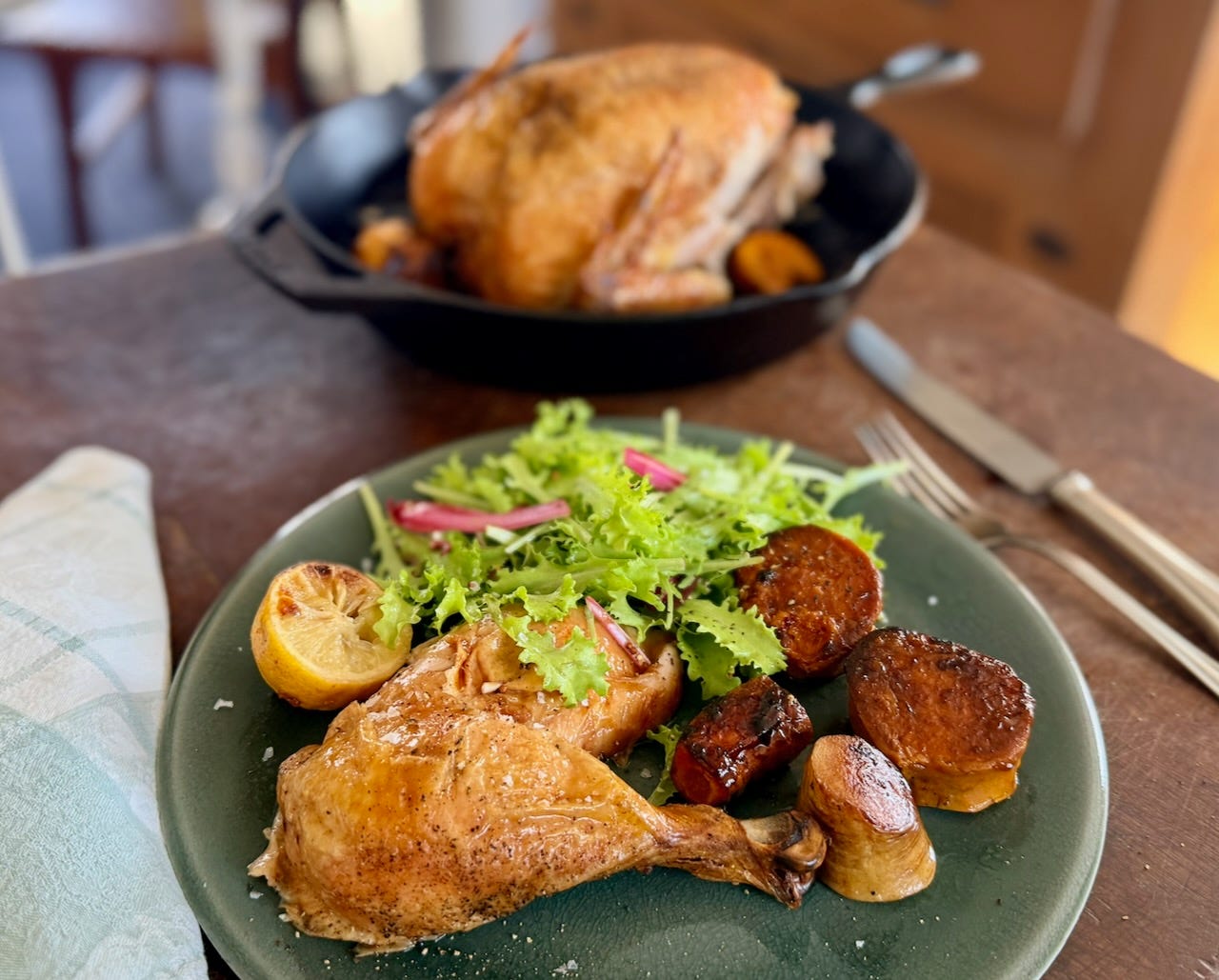
Remove the chicken to a carving board and let rest for 10 minutes, tented loosely with foil. Carve and serve on a bed of vegetables. Drizzle with any pan juices; remove lemon halves from the cavity and squeeze over the meat.
Looks great!